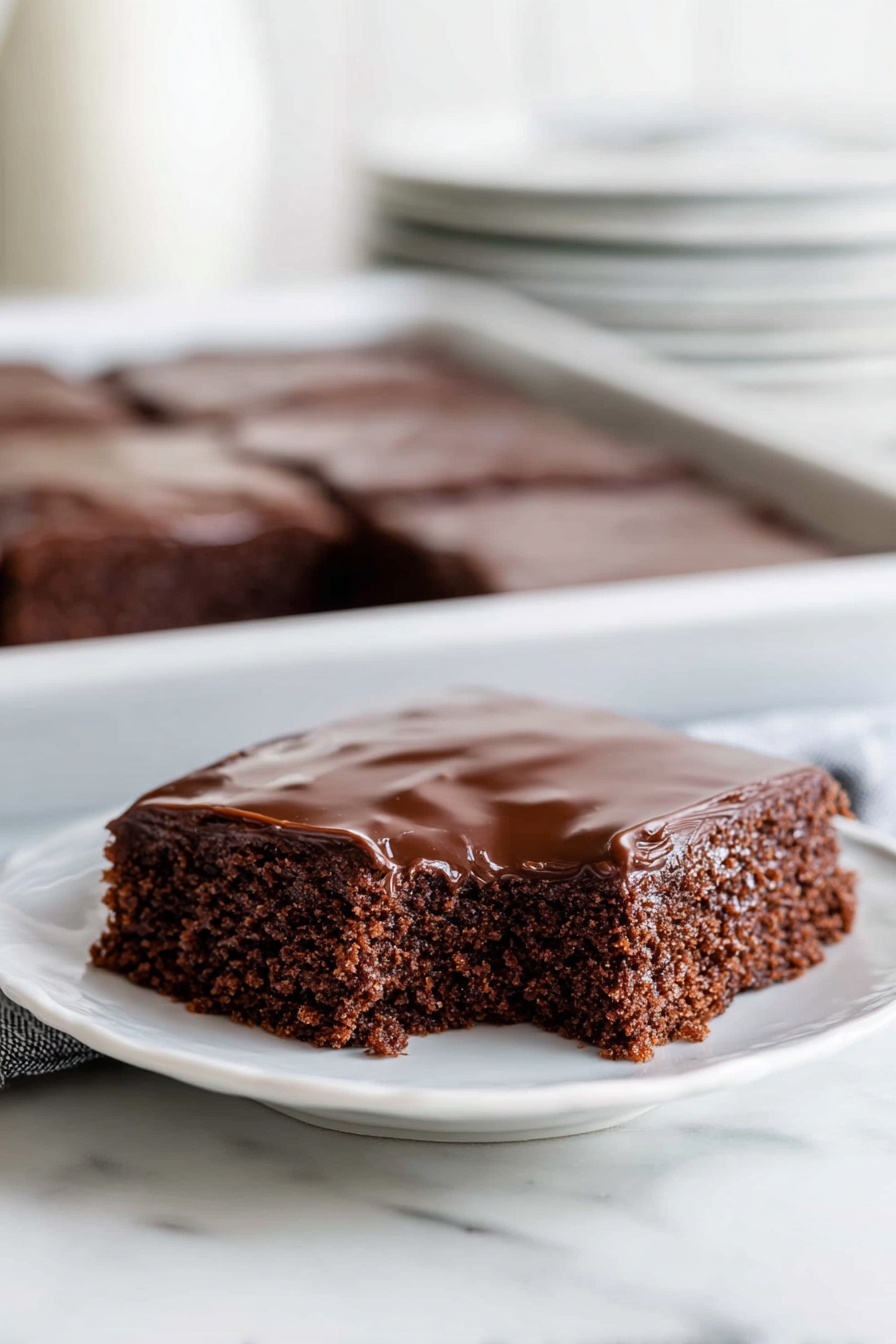
Texas Sheet Cake Recipe
If you’re craving a chocolate dessert that’s both easy and irresistibly moist, you’ve got to try my Texas Sheet Cake Recipe. This cake is a total crowd-pleaser with its tender crumb and that luscious, fudgy frosting that melts right in your mouth. I’ve made this cake countless times for potlucks and family dinners, and every single time, it disappears fast. Stick around — I’m going to share everything you need to nail this classic Southern treat in your own kitchen with zero stress.
Why This Recipe Works
- One-Bowl Magic: Combining the wet chocolate mixture directly with dry ingredients keeps things simple and speeds up prep time.
- Buttermilk Boost: It gives the cake a tender crumb and balances the cocoa’s richness perfectly.
- Quick Bake Time: 15-20 minutes in a jelly roll pan means you get fresh cake fast—no lengthy wait involved.
- Warm Frosting Finish: Pouring the frosting over the cake while it’s still warm creates that signature glossy, fudgy layer that sticks like a dream.

Ingredients & Why They Work
The beauty of this Texas Sheet Cake Recipe is how simple, everyday ingredients come together to make something extraordinary. Each component plays a vital role to achieve that classic texture and flavor we love. When you shop, grab good-quality cocoa for the best chocolate punch and fresh buttermilk to keep the cake moist and tender.
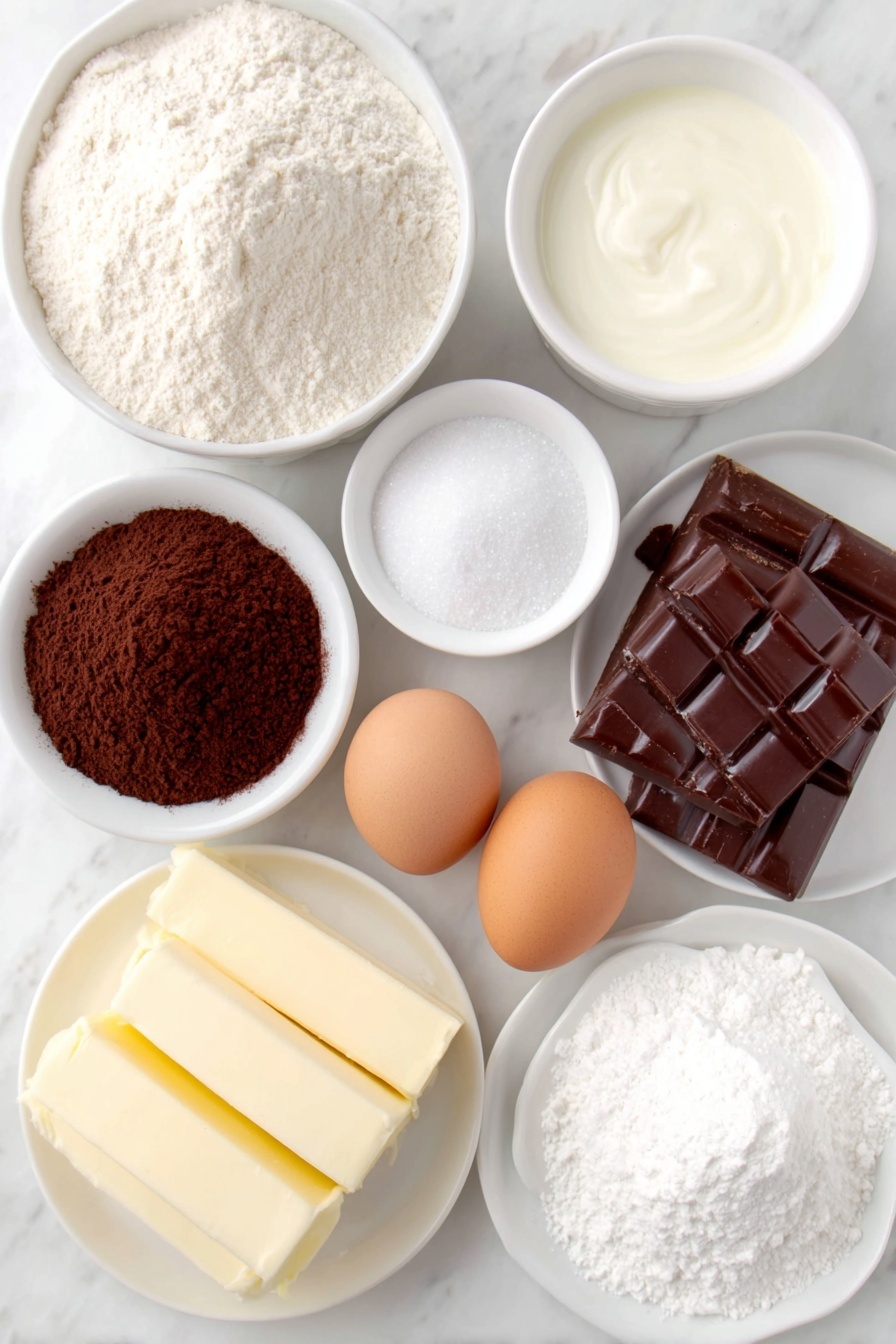
- All-purpose flour: The foundation for our cake’s structure—nothing fancy needed here.
- Sugar: Sweetens and contributes to the cake’s moist texture.
- Baking soda: Helps the cake rise and stay light without becoming dense.
- Salt: Just a pinch enhances all those chocolate flavors without making it salty.
- Buttermilk: Adds moisture and acidity, balancing the cocoa and activating the baking soda.
- Eggs: Provide stability and richness, helping the cake hold its shape.
- Vanilla extract: Adds warmth and depth, rounding out the chocolate.
- Butter (unsalted): Gives richness and flavor; unsalted lets you control the salt levels perfectly.
- Cocoa powder: The heart of the chocolate flavor—go for unsweetened natural cocoa for that deep taste.
- Water: Melts the butter and cocoa together while thinning the batter for that perfect sheet cake consistency.
- Confectioners sugar: For a silky, sweet frosting that’s easy to spread and perfectly glossy.
Tweak to Your Taste
One of my favorite things about this Texas Sheet Cake Recipe is how easily you can tailor it to your own preferences. Whether you want to kick up the chocolate flavor or accommodate dietary needs, there’s room to play.
- Chocolate Lovers’ Upgrade: I often sprinkle mini chocolate chips into the batter for a gooey surprise in every bite — it’s a hit every time!
- Dairy-Free Version: Swap out butter for coconut oil and use a dairy-free buttermilk substitute (just mix almond milk with a splash of vinegar) — it still turns out rich and moist.
- Nutty Addition: Toasted pecans piled on top of the frosting add a wonderful crunch and that classic Texas flavor twist.
- Spicy Kick: I’ve tried adding a pinch of cinnamon or chili powder into the batter for an unexpected warmth that pairs beautifully with chocolate.
Step-by-Step: How I Make Texas Sheet Cake Recipe
Step 1: Preheat and Prep Your Pan
First things first, preheat your oven to 350°F (175°C). I find that a quick spray of non-stick cooking spray on a jelly roll pan is all you need to keep this cake from sticking. No greasing and flouring hassle—just smooth sailing ahead.
Step 2: Mix Dry Ingredients
In a large mixing bowl, whisk together the all-purpose flour, sugar, baking soda, and salt. Doing this early means your leavening agents get spread evenly — no funky spots where the cake might not rise properly.
Step 3: Combine Wet Ingredients
In a smaller bowl, beat the buttermilk, eggs, and vanilla until well combined. It’s important not to overmix here—just enough to get everything integrated smoothly.
Step 4: Make the Cocoa Butter Mixture
Pour the butter, cocoa, and water into a medium saucepan over medium heat. Stir frequently until everything comes to a rolling boil. This step melts the butter and activates the cocoa, helping create that vibrant chocolate flavor. I always keep my eye on it here so it doesn’t burn—stirring constantly is key.
Step 5: Bring It All Together
Quickly pour the hot butter-cocoa mixture into the dry ingredients bowl and stir until combined. Then add your wet buttermilk mixture and gently mix just until smooth. The batter will be thin and glossy—that’s perfect. Pour it immediately into your prepared pan and slide it into the oven.
Step 6: Bake Until Perfect
Bake for 15-20 minutes, or until a toothpick inserted in the center comes out with just a few moist crumbs. Because this cake is thin, it bakes quickly, so watch it closely after 15 minutes. Once done, set it on a wire rack to cool while you mix up the frosting.
Step 7: Whip Up the Fudgy Frosting
In the same saucepan, melt butter, cocoa, and buttermilk over medium heat, stirring until it boils. Take it off the heat, then beat in confectioners’ sugar and vanilla until smooth and spreadable. The frosting should be warm but not hot, so it sinks into the cake just right.
Step 8: Frost While Warm
Pour the warm frosting evenly over the cake. You’ll love how it sinks into the surface, creating that signature shiny, fudgy top layer. Let everything cool completely before cutting to ensure clean slices.
Pro Tips for Making Texas Sheet Cake Recipe
- Use Fresh Cocoa: I always use fresh, good-quality cocoa powder—it makes a noticeable difference in flavor intensity.
- Don’t Overbake: This cake dries out quickly if left too long, so start checking at the 15-minute mark for the perfect moist crumb.
- Frost While Warm: Pouring frosting on the warm cake creates that fudgy, glossy finish that everyone loves.
- Room Temperature Ingredients: Bringing eggs and buttermilk to room temp helps the batter mix evenly and rise beautifully.
How to Serve Texas Sheet Cake Recipe
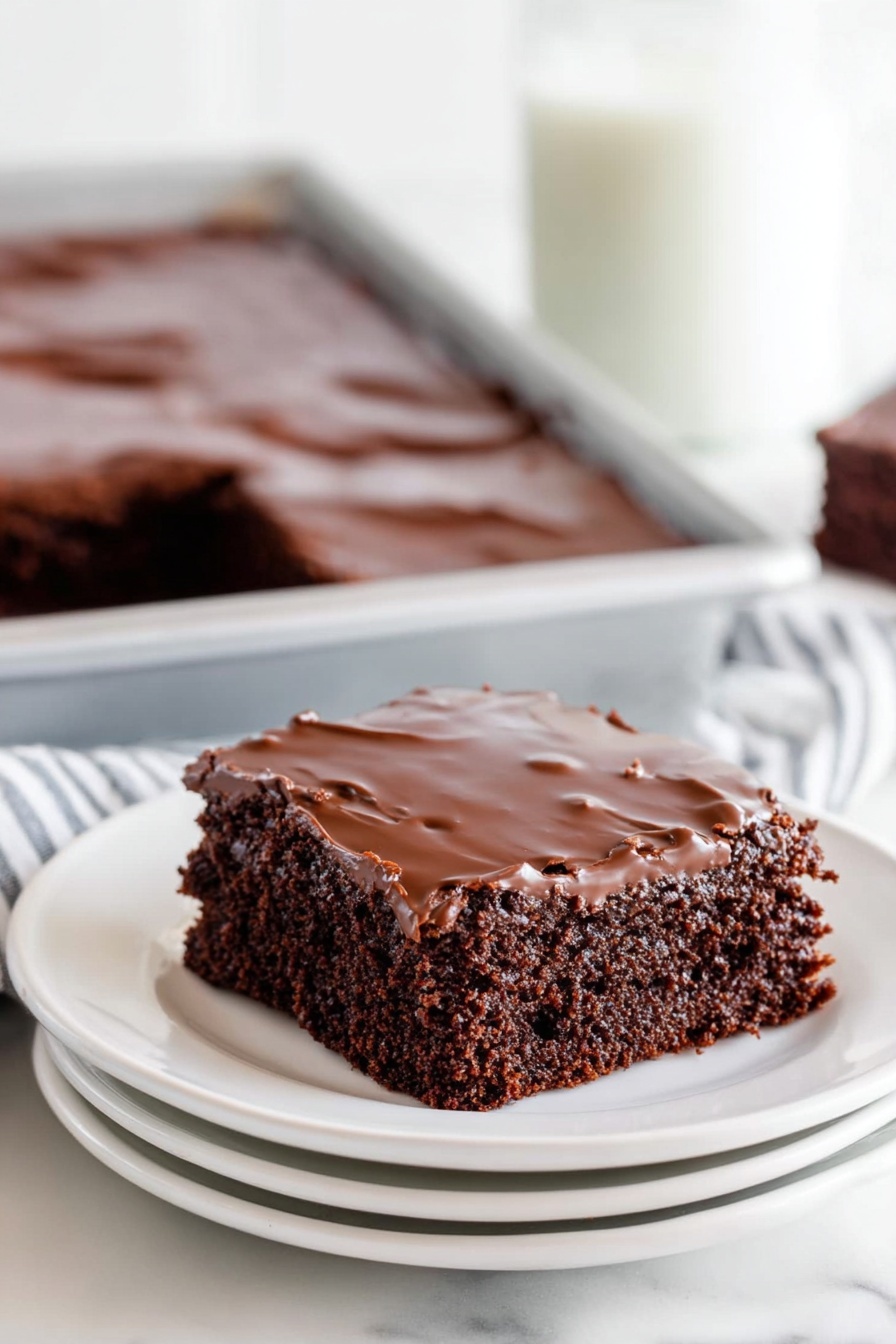
Garnishes
I like to keep it simple: a sprinkle of chopped toasted pecans or even some flaky sea salt on top adds a fun contrast to the sweet frosting. Sometimes, a dollop of whipped cream or a scoop of vanilla ice cream elevates it to dessert-table star status.
Side Dishes
This cake pairs perfectly with a hot cup of coffee or cold milk—the classic combo never fails. For special occasions, I serve it alongside fresh berries or a light fruit salad to balance the richness.
Creative Ways to Present
For birthday parties or potlucks, I’ve turned this into a layer cake using two of these sheet cakes stacked with frosting in between. Or you can cut it into bite-sized squares and arrange on a pretty platter for easy grab-and-go treats—just foolproof and fun!
Make Ahead and Storage
Storing Leftovers
I usually cover the cake tightly with plastic wrap or foil and keep it at room temperature for up to two days—this helps preserve that soft, fresh-baked texture. If your kitchen is warm, storing it in the fridge is fine; just bring slices to room temp before serving.
Freezing
Freezing works great if you want to save some for later! Wrap the cooled cake tightly in plastic wrap and then foil, and freeze for up to 3 months. When you’re ready, thaw overnight in the fridge to keep that fudgy frosting intact.
Reheating
Leftover slices warm up nicely in the microwave for about 15-20 seconds. The frosting softens, and the cake bounces back to just-baked goodness. It’s a great way to enjoy that “fresh from the oven” feeling again.
FAQs
-
Can I use regular milk instead of buttermilk in this Texas Sheet Cake Recipe?
Yes! If you don’t have buttermilk on hand, you can make a quick substitute by adding 1 tablespoon of white vinegar or lemon juice to 1 cup of regular milk. Let it sit for 5 minutes before using. This adds the acidity needed to react with the baking soda and ensures your cake stays moist and tender.
-
Why is the frosting poured over the cake while it’s still warm?
Pouring the frosting on warm cake allows it to melt slightly into the surface, creating a glossy, fudgy finish that is signature to Texas sheet cake. It helps the frosting stick better and gives you that irresistible texture contrast—soft cake beneath a shiny chocolate layer.
-
Can I make this Texas Sheet Cake Recipe gluten-free?
Absolutely! Swap the all-purpose flour with a gluten-free flour blend that measures 1:1 for regular flour. Make sure your baking soda is gluten-free as well. The texture might be slightly different, but the flavor and overall experience remain delicious.
-
How long does the Texas Sheet Cake stay fresh?
At room temperature, it stays fresh for about 2 days when wrapped well. Refrigerated, it can last up to 5 days. For longer storage, freezing is recommended.
Final Thoughts
Honestly, this Texas Sheet Cake Recipe holds a special spot in my dessert lineup because it conjures memories of family gatherings, friendly potlucks, and sweet moments shared all around the kitchen table. It’s simple, approachable, and absolutely delicious—perfect for when you want a no-fuss chocolate cake that feels homemade and loved. I hope you enjoy making and sharing it as much as I do. Trust me, once you try it, you’ll be reaching for this recipe time and time again.
Print
Texas Sheet Cake Recipe
- Prep Time: 15 minutes
- Cook Time: 20 minutes
- Total Time: 35 minutes
- Yield: 24 servings
- Category: Dessert
- Method: Baking
- Cuisine: American
Description
A classic Texas Sheet Cake that’s rich, moist, and topped with a fudgy chocolate frosting. This easy-to-make cake is perfect for gatherings and can be served as a delicious dessert.
Ingredients
Cake:
- 2 cups all-purpose flour
- 2 cups sugar
- 1 teaspoon baking soda
- ½ teaspoon salt
- ½ cup buttermilk
- 2 large eggs
- 1 teaspoon vanilla
- 2 sticks unsalted butter
- 4 tablespoons cocoa powder
- 1 cup water
Frosting:
- ½ cup (1 stick) butter
- 6 tablespoons buttermilk
- 1 pound confectioners sugar
- 4 tablespoons cocoa powder
- 1 teaspoon vanilla
Instructions
- Preheat Oven: Preheat the oven to 350 degrees Fahrenheit and spray a jelly roll pan with non-stick cooking spray to prepare for baking.
- Mix Dry Ingredients: In a large mixing bowl, combine 2 cups all-purpose flour, 2 cups sugar, 1 teaspoon baking soda, and ½ teaspoon salt. Set this mixture aside.
- Combine Wet Ingredients: In a separate small bowl, mix together ½ cup buttermilk, 2 large eggs, and 1 teaspoon vanilla extract. Set aside.
- Prepare Chocolate Mixture: On medium heat, melt 2 sticks of unsalted butter with 4 tablespoons cocoa powder and 1 cup water in a saucepan, stirring frequently until the mixture comes to a boil.
- Combine Mixtures: Pour the hot chocolate mixture from the saucepan into the bowl of dry ingredients and quickly stir to combine thoroughly.
- Add Wet Ingredients: Quickly add the buttermilk, eggs, and vanilla mixture to the combined batter and mix until smooth.
- Bake the Cake: Pour the batter evenly into the prepared jelly roll pan. Bake for 20 minutes or until a toothpick inserted into the center comes out clean.
- Cool Cake: Remove the cake from the oven and place it on a wire rack to cool while preparing the frosting.
- Make Frosting: In a saucepan, melt ½ cup butter with 4 tablespoons cocoa powder and 6 tablespoons buttermilk over medium heat, stirring frequently until it boils.
- Finish Frosting: Remove from heat and stir in 1 pound confectioners sugar and 1 teaspoon vanilla until smooth and well combined.
- Frost Cake: Pour the warm frosting evenly over the warm cake to spread it smoothly.
- Set and Serve: Allow the frosting to cool and set before cutting the cake into pieces. Serve and enjoy.
Notes
- Use unsalted butter to better control the saltiness in the cake and frosting.
- Ensure the cake is still warm when pouring the frosting so it spreads easily and melts slightly into the cake for a fudgy texture.
- For a dairy-free version, substitute buttermilk with a mixture of milk and vinegar or lemon juice, and use a vegan butter alternative.
- Make sure not to overbake; start checking the cake at 20 minutes to keep it moist.
- This cake can be stored covered at room temperature for up to 3 days or refrigerated for up to a week.
Nutrition
- Serving Size: 1 piece
- Calories: 320 kcal
- Sugar: 35 g
- Sodium: 150 mg
- Fat: 14 g
- Saturated Fat: 8 g
- Unsaturated Fat: 5 g
- Trans Fat: 0 g
- Carbohydrates: 45 g
- Fiber: 3 g
- Protein: 4 g
- Cholesterol: 55 mg