
Korean Beef Sesame Noodles Recipe
If you’re anything like me and love quick, flavorful meals that feel a little fancy without a ton of fuss, then you’re going to adore this Korean Beef Sesame Noodles Recipe. It’s my go-to when I want a satisfying dinner with that perfect balance of sweet, spicy, and savory – all packed into one bowl. Plus, it’s ready in about 20 minutes, which means more time to relax and less time stressing over dinner.
Why This Recipe Works
- Speedy and Easy: You get a delicious, restaurant-quality meal on the table in just 20 minutes.
- Bold Balanced Flavors: The sauce’s sweet honey, spicy gochujang, and nutty sesame oil create layers of flavor that keep every bite exciting.
- Flexible Ingredients: Whether you use flank steak or chicken, and swap veggies depending on your fridge, this recipe adapts easily.
- Healthy and Satisfying: Brown rice noodles and fresh vegetables make it hearty but wholesome.

Ingredients & Why They Work
Choosing the right ingredients makes all the difference in an Asian-inspired noodle dish like this. Each component brings not just flavor but also texture and freshness that I’ve found irresistible every time I’ve made these Korean beef sesame noodles.

- Garlic: Fresh garlic adds that punch of savory aroma that wakes up the sauce.
- Fresh ginger: It gives a subtle zing that balances the sweetness of the honey and richness of the beef.
- Tamari or soy sauce: I recommend tamari if you’re gluten-sensitive; it provides that deep umami without overpowering.
- Honey: Sweetness is key here — it tames the heat from gochujang and adds a nice glaze to the meat.
- Rice vinegar: Adds acidity to cut through the richness and brighten the whole dish.
- Gochujang (Korean chili paste): This is your spicy-sweet magic ingredient, giving the noodles their iconic Korean kick.
- Toasted sesame oil: An absolute must for that nutty aroma and flavor that makes this recipe sing.
- Brown rice noodles: They hold up well when cooked and tossed, plus they add a nuttier flavor compared to regular noodles.
- Sesame oil for stir-frying: This helps toast and enhance the flavors of the veggies and beef gently.
- Mixed stir fry vegetables: Fresh veggies are my favorite for crunch and color—think bell peppers, snap peas, carrots, and broccoli.
- Shallots: They soften beautifully and add a subtle sweetness, different from regular onions.
- Flank steak or chicken breast: Thin slicing helps meat cook super fast and stay tender.
- Toasted sesame seeds: Sprinkled on top for an extra layer of texture and nutty flavor.
- Fresh basil: To stir in at the end or as garnish, basil gives a fresh herby brightness that lights up the dish.
Tweak to Your Taste
One of my favorite things about the Korean Beef Sesame Noodles Recipe is how easy it is to customize. I often change it up depending on what I’m craving or what’s in my kitchen. Feel free to make it your own!
- Vegetable Variations: I sometimes swap in spinach, bok choy, or even mushrooms when I want a different texture or flavor. It’s a flexible canvas.
- Protein Swaps: Chicken breast works fabulously here, especially if sliced thin. For a vegetarian version, try firm tofu and amp up the veggies.
- Heat Level: If you’re sensitive to spice, start with just 1 tablespoon of gochujang and adjust up from there.
- Sweetener Substitutions: You can replace honey with maple syrup or brown sugar if you prefer.
Step-by-Step: How I Make Korean Beef Sesame Noodles Recipe
Step 1: Whisk up your sauce with love
Start by combining garlic, ginger, tamari, honey, rice vinegar, gochujang, and toasted sesame oil in a glass jar or bowl. I usually shake the jar like a little dance party to get everything perfectly mixed. The sauce is the heart of this recipe, so take a moment to taste it – you’ll want a balance of sweet, salty, and spicy. Adjust if needed to suit your palate.
Step 2: Cook and chill the noodles
Cook your brown rice noodles according to the package directions. I like to undercook them just slightly as they’ll finish cooking in the pan later. Drain, then rinse under cold water to stop cooking and keep them from sticking. This step is something I never skip – it really helps with the final texture.
Step 3: Stir-fry the veggies
Heat a tablespoon of sesame oil in a large skillet over high heat. Toss in your mixed veggies and stir-fry just until they begin to wilt—usually about 2–3 minutes. Then stir in two tablespoons of your sauce, cooking until the veggies are evenly coated and glossy. This quick step ensures all those fresh veggies soak up some flavor without getting soggy. Set them aside for now.
Step 4: Sear the shallots and beef
In the same pan, add another tablespoon of sesame oil, then your sliced shallots. Let them cook until they’re soft and fragrant—about 2 minutes. Add the thinly sliced flank steak (or chicken) in a single layer and don’t stir for 2 minutes so you get a nice sear. Then toss to cook through. Pour in the remaining sauce and let it simmer for a minute so the meat absorbs all that flavor.
Step 5: Combine noodles, veggies, and finish strong
Stir in the noodles and reserved vegetables. Toss everything together well and cook for 2–3 minutes, letting the sauce coat every strand of noodle perfectly. Remove from heat, then fold in fresh basil and toasted sesame seeds. Serve hot, with a sprinkle of more basil if you like a fresh pop of flavor. Doing this last step off the heat keeps that fresh herbal brightness alive.
Pro Tips for Making Korean Beef Sesame Noodles Recipe
- Use Fresh Aromatics: Don’t substitute garlic or ginger with powder here—fresh adds an unbeatable brightness.
- Prep Ingredients Before Starting: Because this cooks fast, have everything sliced and measured to keep the process smooth.
- Don’t Overcook the Beef: Keep an eye on it and sear quickly to keep it tender and juicy, not tough.
- Sauce Adjustments are Key: Taste your sauce after mixing and tweak honey or gochujang to get your perfect sweet-spicy balance.
How to Serve Korean Beef Sesame Noodles Recipe

Garnishes
I love topping my Korean Beef Sesame Noodles with an extra handful of fresh basil and a sprinkle of toasted sesame seeds for crunch. If you want to amp it up, thinly sliced scallions or a few chili flakes add a nice pop of color and heat.
Side Dishes
This dish pairs beautifully with a light cucumber salad or simple kimchi to add a refreshing sharpness and balance the richness. I also enjoy serving it alongside steamed edamame or pickled veggies for extra texture contrast.
Creative Ways to Present
For a dinner party, I’ve arranged these noodles in individual bowls topped with an edible flower or microgreens for a fancy look. You can also serve the noodles cold as a Korean-inspired pasta salad on warmer days, just toss with extra sauce and fresh veggies.
Make Ahead and Storage
Storing Leftovers
I keep leftovers in an airtight container in the fridge for up to 3 days. Because the noodles soak up sauce over time, I like to add a splash of water or a little extra sesame oil when reheating to keep them moist and prevent sticking.
Freezing
This recipe freezes fairly well, especially if you separate the noodles from the protein and veggies beforehand. Freeze in portion-sized containers and thaw overnight in the fridge for best results. Just be mindful that the texture of brown rice noodles can change slightly after freezing.
Reheating
Reheat gently in a skillet over medium heat until warmed through, adding a splash of water or broth if needed. Avoid microwaving for long periods, which can dry out the beef and noodles.
FAQs
-
Can I use regular pasta instead of brown rice noodles in this Korean Beef Sesame Noodles Recipe?
Absolutely! While brown rice noodles add a nuttier flavor and a bit more chew, regular spaghetti or linguine works fine. Just cook them until al dente, rinse under cold water, and proceed with the recipe as usual.
-
What can I substitute for gochujang if I can’t find it?
If gochujang isn’t available, you can mix a tablespoon of miso paste with a little chili paste or sriracha to mimic the sweet-spicy flavor. It won’t be exactly the same but still delicious and in the spirit of the recipe.
-
Is this Korean Beef Sesame Noodles Recipe gluten-free?
It can be! Use tamari instead of soy sauce, choose gluten-free noodles (like certain brown rice noodles), and double-check your gochujang is gluten-free to keep it safe for gluten-sensitive diets.
-
Can I make this recipe vegetarian or vegan?
Definitely! Swap out the beef for tofu or tempeh and pile on extra veggies. Make sure to use a plant-based honey substitute or maple syrup to keep it vegan.
Final Thoughts
This Korean Beef Sesame Noodles Recipe has been a game-changer for my weeknight dinners. It’s quick enough for busy nights but rich and flavorful enough that it never feels like a compromise. I love sharing it with friends because it’s a little different from the usual pasta and brings a taste of something special to the table. I hope you enjoy making it as much as I do – trust me, once you try it, this dish will become one of your favorites too!
Print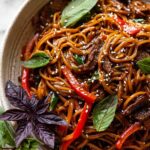
Korean Beef Sesame Noodles Recipe
- Prep Time: 15 minutes
- Cook Time: 10 minutes
- Total Time: 25 minutes
- Yield: 4 servings
- Category: Main Course
- Method: Stovetop
- Cuisine: Korean
Description
A quick and flavorful Korean-inspired dish featuring tender flank steak and mixed vegetables tossed in a savory and spicy sesame sauce, served over brown rice noodles. Ready in just 25 minutes, perfect for a weeknight dinner.
Ingredients
Sauce
- 4 cloves garlic chopped
- 1 tablespoon chopped fresh ginger
- 1/2 cup tamari or soy sauce
- 1/4 cup honey
- 2 tablespoons rice vinegar
- 3 tablespoons Gochujang (Korean chili paste)
- 1 tablespoon toasted sesame oil
Stir Fry
- 8 ounces brown rice noodles
- 2 tablespoons sesame oil, divided
- 3 cups mixed stir fry vegetables
- 3 shallots, sliced
- 1 pound flank steak or chicken breast, sliced thin
- 1/4 cup toasted sesame seeds
- 1/2 cup fresh basil
Instructions
- Make the sauce: Combine garlic, ginger, tamari or soy sauce, honey, rice vinegar, Gochujang, and toasted sesame oil in a glass jar. Shake well or whisk until fully combined.
- Prepare noodles: Cook the brown rice noodles according to the package directions. Once cooked, drain and rinse under cold water to stop the cooking process and prevent sticking.
- Cook vegetables: Heat 1 tablespoon of sesame oil in a large skillet over high heat. Add the mixed stir fry vegetables and cook for 2 to 3 minutes until wilted. Stir in 2 tablespoons of the prepared sauce to coat the vegetables, then remove them from the pan and set aside.
- Sauté shallots and beef: In the same skillet, add the remaining 1 tablespoon of sesame oil. Add the sliced shallots and cook for 2 minutes until softened and fragrant. Add the thinly sliced flank steak, cooking undisturbed for 2 minutes to sear. Toss the meat, then pour in the remaining sauce and let it simmer for 1 minute.
- Combine everything: Stir in the cooked noodles and vegetables into the skillet with the beef and sauce. Cook together for 2 to 3 minutes, allowing the sauce to coat the noodles evenly.
- Finish and serve: Remove from heat and stir in fresh basil and toasted sesame seeds. Serve immediately, garnished with extra basil if desired.
Notes
- Substitute flank steak with chicken breast for a leaner protein option.
- Use gluten-free tamari to make this dish gluten free.
- Adjust Gochujang quantity to control the spice level.
- Brown rice noodles can be swapped with rice vermicelli or soba noodles depending on preference.
- Fresh basil adds a bright herbal note but can be replaced with cilantro or mint.
- Prepare sauce in advance to save time on busy nights.
Nutrition
- Serving Size: 1 serving
- Calories: 480 kcal
- Sugar: 12 g
- Sodium: 900 mg
- Fat: 15 g
- Saturated Fat: 2.5 g
- Unsaturated Fat: 10 g
- Trans Fat: 0 g
- Carbohydrates: 55 g
- Fiber: 4 g
- Protein: 30 g
- Cholesterol: 60 mg