Garlic Rosemary Focaccia Bread Recipe
If you’re craving a perfectly fluffy yet crisp bread bursting with fragrant herbs and garlic, you’re in the right place. This Garlic Rosemary Focaccia Bread Recipe is seriously one of my favorites to make when I want something warm, comforting, and a little fancy without too much fuss. Trust me, once you get the hang of it, you’ll be baking loaves for breakfast, lunch, and dinner—or just snacking straight from the pan. Keep reading and I’ll walk you through every step to get that golden crust and pillowy inside that focaccia lovers dream about!
Why This Recipe Works
- Perfect Yeast Activation: Using warm water between 105°F and 115°F wakes up the yeast gently for a flawless rise.
- Roasted Garlic Depth: Baking whole garlic bulbs before mixing softens the flavor, giving a mellow, sweet garlic aroma that melds perfectly with rosemary.
- Olive Oil Richness: Olive oil isn’t just for flavor—it tenderizes the dough and creates that signature golden crust you want in focaccia.
- Simple Ingredients, Big Flavor: Basic pantry staples combine here in a way that feels fancy but is totally doable in any kitchen.

Ingredients & Why They Work
Every ingredient in this Garlic Rosemary Focaccia Bread Recipe pulls double duty—flavor and texture. Using fresh rosemary and roasted garlic amps up the aroma, while the olive oil keeps the crumb moist and tender. I always recommend fresh herbs and quality olive oil, because you really taste the difference. Here’s a quick rundown to keep your shopping list smart and your focaccia on point:
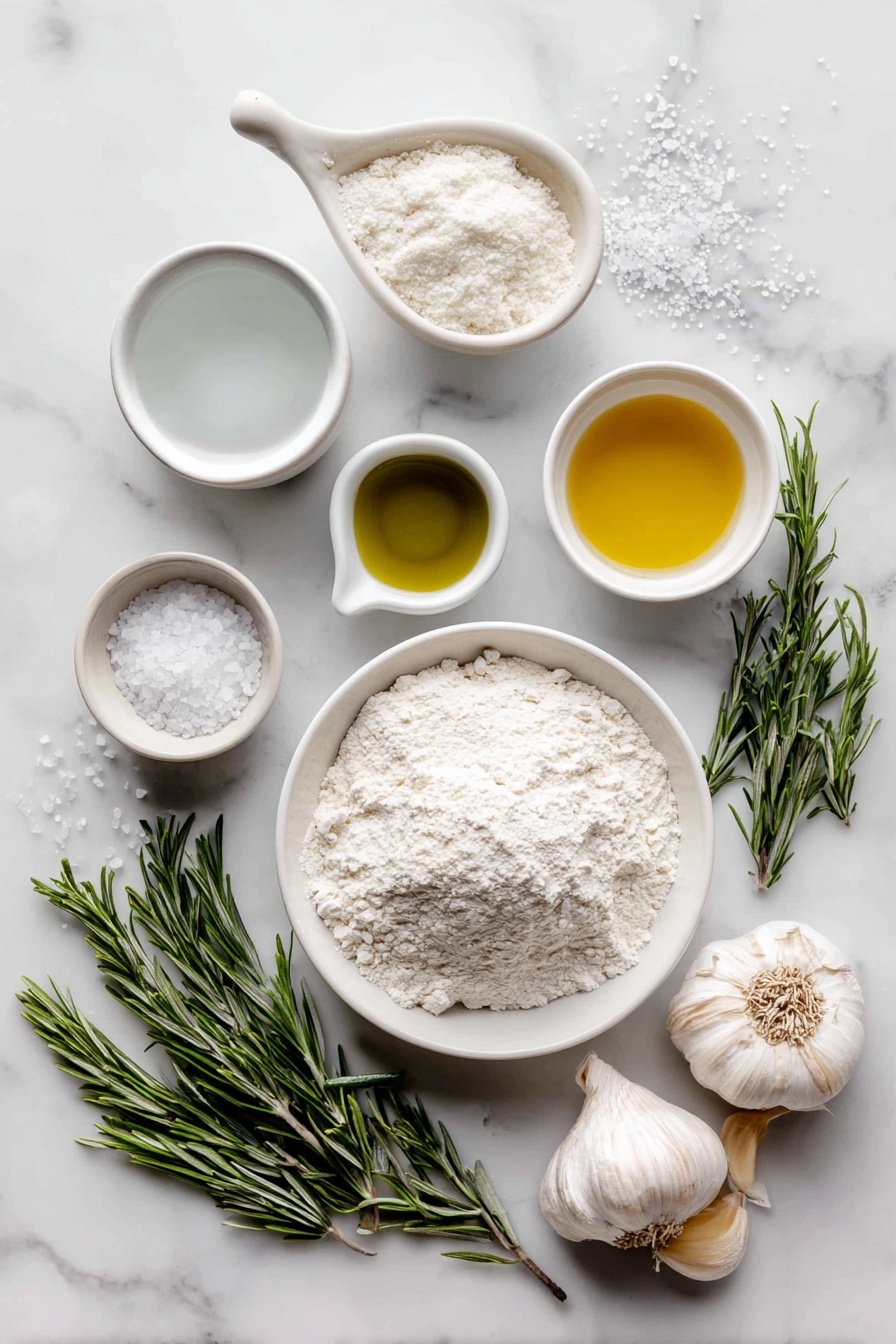
- Warm water: Crucial for activating the yeast without killing it, stick to 105°F to 115°F for that perfect froth.
- Granulated sugar: Just a touch feeds the yeast, helping the dough rise beautifully.
- Instant yeast: I love instant yeast for speed and ease—it mixes right in without proofing separately.
- All purpose flour: Gives a chewy yet soft base to your focaccia—measure carefully using the spoon and level method to avoid a dense loaf.
- Salt: Balances the flavors perfectly and strengthens the dough’s structure.
- Olive oil: Divided into the dough and brushed on top for flavor, moisture, and that irresistible golden crust.
- Fresh rosemary: The herb star—adds woodsy, piney notes that pair beautifully with garlic.
- Whole garlic bulbs: Roasting softens the garlic making it sweet and tender, which mellows the sharpness raw garlic can have.
- Coarse salt topping: Adds crunch and bursts of flavor on the crust—don’t skip it!
Tweak to Your Taste
I love making this focaccia exactly as written, but it’s pretty forgiving and perfect for your own spin. Sometimes I toss in sliced olives or sun-dried tomatoes with the rosemary for a Mediterranean vibe. You can also swap fresh herbs depending on the season or your garden bounty. And hey, if you want it lighter, experiment with half whole wheat flour—just be mindful it might change the texture slightly.
- Herb swaps: Thyme or sage make lovely alternatives if you don’t have rosemary handy.
- Garlic variation: Garlic powder sprinkled on top can be a shortcut, though roasted garlic gives that unbeatable depth.
- Dietary tweak: For a dairy-free, vegan-friendly loaf, this recipe already fits perfectly—just stick with your favorite olive oil.
Step-by-Step: How I Make Garlic Rosemary Focaccia Bread Recipe
Step 1: Awaken the Yeast and Prepare the Garlic
First things first—get your water temperature right. I use a kitchen thermometer to make sure it’s between 105°F and 115°F, because too hot can kill the yeast and too cool slows activation. Stir in your sugar and yeast, then let it froth up for about 5 minutes—it should get bubbly and smell a little yeasty. While that’s waking up, pop the peeled garlic cloves into a small skillet and bake at 350°F for roughly 30 minutes; roasting brings out that sweet, mellow flavor I adore in focaccia.
Step 2: Mix the Dough and Let It Rise
Next, gently spoon out your flour into a bowl using that spoon-and-level method—I’ve learned this step makes a big difference when you want a tender crumb. Toss the flour with salt, a quarter cup of olive oil, and half the roasted garlic chopped finely. Pour the yeast mixture in slowly while mixing with a dough hook on medium speed. Let it mix for about 5 minutes until the dough pulls away from the bowl and is just slightly sticky. If it’s too sticky to handle, sprinkle in a little more flour bit by bit.
Step 3: First Rise and Prepare Your Pan
Transfer your dough to a large bowl greased with olive oil. Don’t skip brushing the top of the dough with oil—it keeps it wonderfully soft. Cover the bowl with plastic wrap and place it somewhere warm but not too hot; my kitchen windowsill works perfectly at about 1½ hours for the dough to double. Meanwhile, grease your 9×13” baking sheet generously with olive oil.
Step 4: Shape and Second Rise
Once your dough has puffed up, gently press it out with your fingers onto the baking sheet to form an even layer that fills the pan. Don’t use a rolling pin here—you want to keep those lovely air bubbles. Cover it again with plastic wrap and let it rest for another 30 minutes in a warm spot. This second rise is where you start seeing that focaccia magic.
Step 5: Dimple, Dress, and Bake
This is my favorite part—poke those signature little dimples all over the dough with your fingertips. It’s like giving your bread a little personality. Brush the top with more olive oil, then scatter the rest of your roasted garlic cloves and chopped rosemary evenly. Don’t be shy with the coarse salt topping—it’s key for that perfect savory crunch. Bake in the middle rack at 400°F for about 20 minutes until golden and crisp on the edges.
Step 6: Final Brush and Cool
As soon as you pull your focaccia from the oven, brush it once more lightly with olive oil. This keeps the crust supple and adds a pretty sheen. Let it cool slightly before slicing (if you can wait that long—I definitely don’t always!).
Pro Tips for Making Garlic Rosemary Focaccia Bread Recipe
- Water Temperature Control: I swear by using a thermometer to nail the water temperature—it makes yeast activation a breeze and ensures your dough rises every time.
- Don’t Skip Roasting Garlic: Roasting whole garlic softens its punch, giving your focaccia a mild sweetness that harmonizes beautifully with rosemary.
- Use Your Fingers for Shaping: Instead of a rolling pin, use your fingertips to stretch the dough; it preserves those beautiful air bubbles for a light inside.
- Olive Oil Matters: Brush on the olive oil twice—before and after baking—to keep the crust soft and flavorful, plus it helps the salty toppings stick.
How to Serve Garlic Rosemary Focaccia Bread Recipe
Garnishes
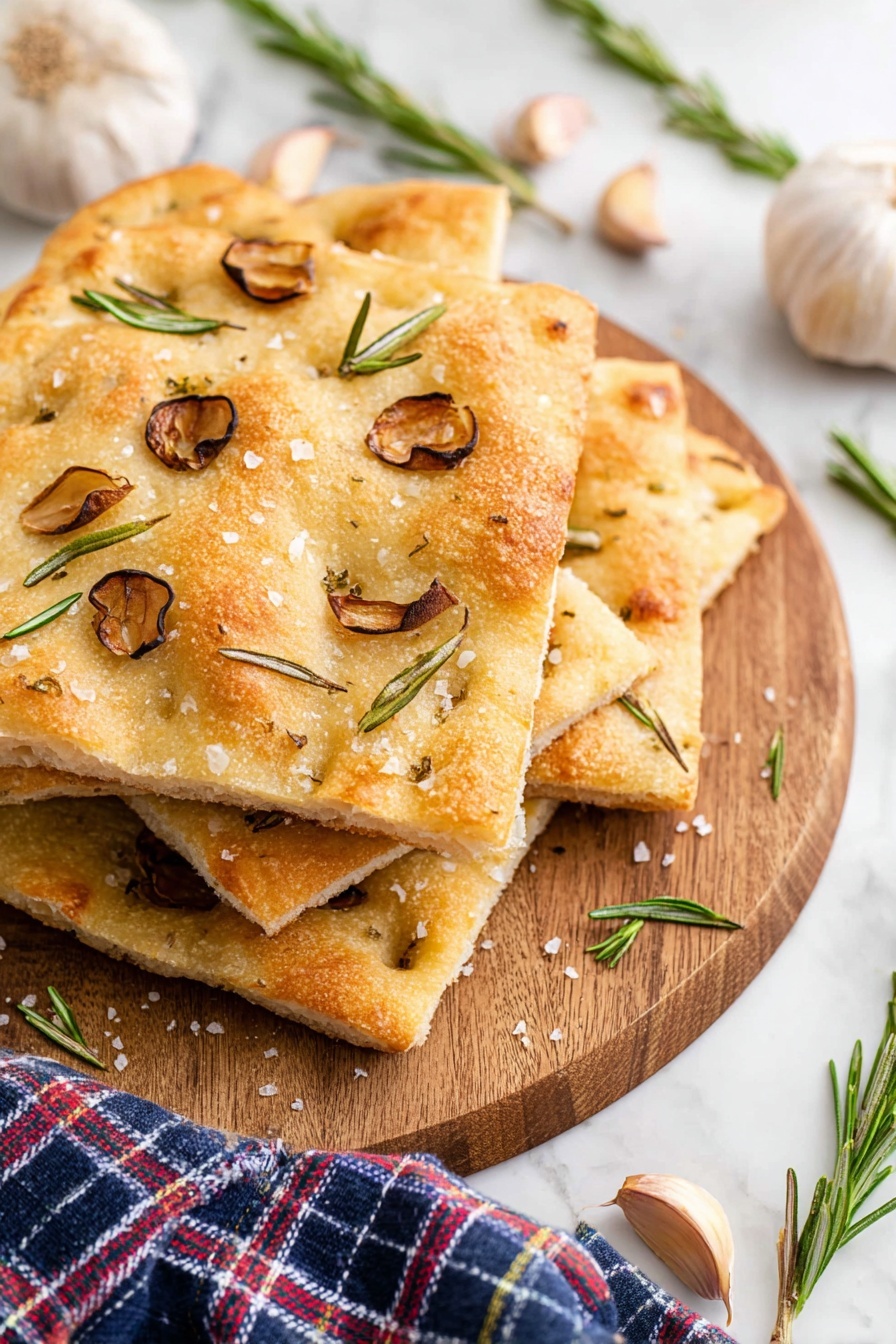
I often finish the focaccia with a few extra rosemary needles and a light drizzle of extra virgin olive oil right before serving—it makes the bread feel even fresher and more aromatic. Sometimes, I like to sprinkle a pinch of freshly cracked black pepper or even a few red chili flakes for a subtle kick that pairs surprisingly well with the garlic.
Side Dishes
This focaccia is a champion alongside soups like tomato basil or minestrone, and it pairs perfectly with fresh salads—think arugula dressed with lemon and parmesan. For dinner, I love serving it next to roasted chicken or as part of a Mediterranean spread with olives, cheeses, and cured meats.
Creative Ways to Present
For special occasions, I like cutting the focaccia into rustic squares and stacking them on wooden boards with small bowls of flavored olive oils for dipping—adding things like sun-dried tomato oil or chili-infused oil gives your guests a fun tasting experience. You can also top the focaccia before baking with cherry tomatoes and olives for a colorful, festive look that doubles as a party centerpiece.
Make Ahead and Storage
Storing Leftovers
I store leftover focaccia loosely covered in foil or a breathable bread bag at room temperature—it stays soft for about 2 days that way. If your kitchen is humid, adding a paper towel in the container helps keep moisture balanced and prevents sogginess.
Freezing
Freezing focaccia is a lifesaver! I wrap the cooled bread tightly in plastic wrap, then again in foil before popping it in the freezer. When you’re ready, thaw it at room temperature, then warm it in the oven to refresh that crust.
Reheating
To bring leftovers back to life, I preheat my oven to 350°F, place the focaccia on a baking sheet, and warm it for 8-10 minutes. This revives the crust’s crispness and warms the garlic and rosemary flavors beautifully. Avoid microwaving if you want to keep that texture—it tends to go gummy.
FAQs
-
Can I make this Garlic Rosemary Focaccia Bread Recipe without a stand mixer?
Absolutely! You can mix and knead the dough by hand. Mix the flour, salt, oil, and garlic in a large bowl, then add the yeast mixture and stir with a wooden spoon until it starts to form a dough. Knead on a floured surface for about 8-10 minutes until the dough is smooth and elastic. It will take a bit more elbow grease but the result is just as delightful.
-
What if I don’t have fresh rosemary?
If fresh rosemary isn’t available, dried rosemary can work in a pinch, but use it sparingly as it’s more concentrated and can be a bit tough. Crush it slightly before sprinkling over the dough. Alternatively, other fresh herbs like thyme or sage also make fantastic flavor swaps.
-
Why do I need to roast the garlic? Can I use it raw?
Roasting garlic softens its sharpness and brings out a sweet, mellow flavor that balances beautifully with rosemary and olive oil. Using raw garlic can give a harsh bite that might overpower the focaccia. So I recommend roasting, but if you’re in a hurry, finely minced raw garlic can be mixed in—but use less to avoid bitterness.
-
How can I tell when the focaccia is fully baked?
Your focaccia should be golden brown on top and crisp around the edges. When you tap the bottom of the loaf, it should sound hollow. If you have an instant-read thermometer, the internal temperature should be around 200°F for fully baked bread.
Final Thoughts
This Garlic Rosemary Focaccia Bread Recipe has become a staple for me whenever I want to impress with minimal effort. It’s warm and inviting, fragrant with garlic and rosemary that fills the kitchen and the heart. If you’re new to bread baking or a seasoned pro, you’ll enjoy how this dough behaves—and how delicious it tastes fresh from the oven. Give it a try and make it your own; I’m pretty sure it’ll become one of your favorite go-to breads too!
Print
Garlic Rosemary Focaccia Bread Recipe
- Prep Time: 10 minutes
- Cook Time: 20 minutes
- Total Time: 2 hours 30 minutes
- Yield: 8 servings
- Category: Bread
- Method: Baking
- Cuisine: Italian
- Diet: Vegetarian
Description
This Garlic Rosemary Focaccia recipe yields a fragrant, soft, and flavorful Italian bread topped with roasted garlic, fresh rosemary, and coarse salt. Perfect as a side or appetizer, it features a tender crumb infused with olive oil and aromatic herbs.
Ingredients
Dough
- 1-1/3 cup warm water (105°F to 115°F)
- 2 teaspoons granulated sugar
- 1 ounce instant yeast (2-¼ teaspoons)
- 3-3/4 cups all-purpose flour (480g)
- 2 teaspoons salt
- 1/4 cup olive oil
- 1/2 of roasted garlic cloves (from 2 whole bulbs)
Topping
- 1/4 cup olive oil
- 1/2 of roasted garlic cloves (from 2 whole bulbs)
- 3 sprigs fresh rosemary
- Coarse salt for sprinkling
Instructions
- Activate Yeast: Using a thermometer, ensure the water is between 105°F and 115°F. In a small bowl, combine warm water, granulated sugar, and instant yeast. Let sit for 5 minutes until frothy.
- Roast Garlic: Preheat the oven to 350°F. Separate and peel the garlic bulbs. Place the peeled garlic cloves in a small skillet and bake for about 30 minutes until soft. Chop half of the roasted garlic cloves for the dough and reserve the other half for topping.
- Mix Dry Ingredients: Measure 3-¾ cups of flour using the spoon and leveling method. In the bowl of a stand mixer fitted with a dough hook, mix flour, salt, 1/4 cup olive oil, and the chopped roasted garlic.
- Combine Dough: Pour the activated yeast mixture into the flour mixture. Mix slowly at first, then increase to medium speed. Knead for about 5 minutes until the dough pulls away from the bowl and feels not sticky. Add a little extra flour if dough is too sticky.
- First Rise: Transfer the dough to a large mixing bowl greased with olive oil. Brush the top of the dough with olive oil and cover with plastic wrap. Place in a warm spot to rise for 1 hour and 30 minutes until doubled in size.
- Prepare Baking Sheet & Second Rise: Preheat the oven to 400°F. Grease a 9×13-inch baking sheet with olive oil. Transfer the dough onto the sheet and use your fingers to stretch and press it evenly to cover the entire surface. Cover with plastic wrap and let rise in a warm place for 30 minutes.
- Add Toppings: Once the dough has risen, use your fingers to poke holes evenly throughout. Brush with remaining olive oil, sprinkle with reserved roasted garlic cloves, fresh rosemary leaves, and coarse salt.
- Bake: Place the baking sheet on the middle oven rack and bake for about 20 minutes until golden brown and cooked through.
- Finish: Remove from oven and brush lightly again with olive oil. Let cool slightly before serving.
Notes
- Use a thermometer to ensure water temperature is accurate for proper yeast activation.
- Roasting garlic mellows its flavor and makes it sweeter; do not skip this step.
- If you do not have a stand mixer, you can knead the dough by hand for about 10 minutes.
- Allowing the dough to rise twice ensures a light and airy focaccia.
- Use coarse salt for a nice crunchy texture and flavor contrast on top.
- This bread is best served fresh but can be reheated and enjoyed within 2 days.
Nutrition
- Serving Size: 1 slice (based on 8 servings)
- Calories: 220 kcal
- Sugar: 1 g
- Sodium: 320 mg
- Fat: 9 g
- Saturated Fat: 1.3 g
- Unsaturated Fat: 7.2 g
- Trans Fat: 0 g
- Carbohydrates: 28 g
- Fiber: 1.5 g
- Protein: 5 g
- Cholesterol: 0 mg