Easy Turkey Gravy Recipe
If you’ve ever found yourself scrambling to make gravy that actually tastes like it belongs on a juicy turkey, you’re in the right spot. This Easy Turkey Gravy Recipe is hands-down one of my favorite shortcuts to elevate any holiday meal or Sunday dinner without fuss. Trust me, once you nail this, you’ll never settle for anything less than silky, flavorful gravy that steals the show.
Why This Recipe Works
- Simple Ingredients: Uses common pantry staples and fresh herbs for a quick, flavorful gravy.
- Perfect Texture: The flour and butter base creates a smooth, luscious consistency every single time.
- Flexible Flavor: Incorporates fresh sage and thyme, but you can easily adjust herbs to your liking.
- No Fuss Method: No complicated roux making or last-minute scrambling – this recipe fits seamlessly into your cooking flow.

Ingredients & Why They Work
Every ingredient in this easy turkey gravy recipe has a job that blends into the final masterpiece — a rich, silky sauce you won’t want to put down. Plus, these ingredients are easy to find and won’t break the bank.
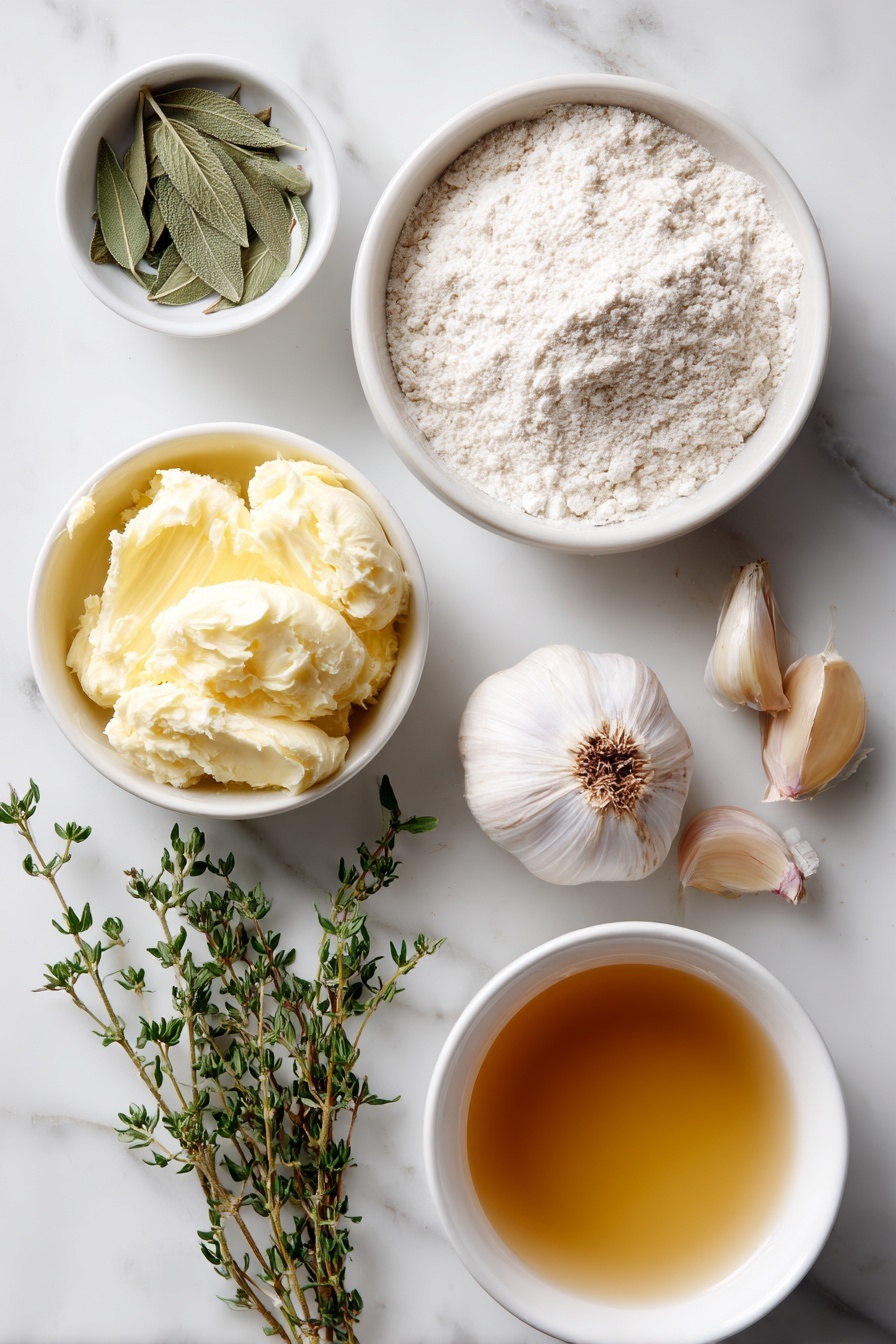
- Butter: The fat base that helps carry the flavors and creates that classic smooth texture.
- Dried Sage: Adds an earthy warmth traditional to turkey gravy—use sparingly to avoid overpowering.
- Fresh Thyme: Lifts the gravy with herbaceous notes; fresh is always better here if you can get it.
- Garlic: Just a hint of garlic rounds out the savoriness without stealing the spotlight.
- All-purpose Flour: Thickens the gravy into that perfect pourable consistency without lumps (when whisked right!).
- Turkey Stock/Pan Drippings: This is the soul of your gravy – that deep, rich flavor that makes it unmistakably turkey gravy.
Tweak to Your Taste
Like most of my kitchen experiments, I like to play around with herbs and thickness depending on what I’m serving it with. Feel free to make this your own—you’ll appreciate how adaptable this easy turkey gravy recipe really is.
- Herb Swap: Sometimes I trade thyme for rosemary or add a pinch of marjoram for a different twist that’s equally delicious.
- Thickness Adjustments: If you like your gravy thicker, just whisk in a bit more flour, or thin it down with a splash of stock or water if it’s too thick.
- Garlic Boost: For a subtle garlic punch, I gently roast the garlic before adding it to the butter – it mellows beautifully.
- Vegetarian Version: Substitute veggie stock and skip the pan drippings for a gravy that’s still rich and satisfying.
Step-by-Step: How I Make Easy Turkey Gravy Recipe
Step 1: Harvest the Pan Drippings
After roasting your turkey, carefully pour out the pan drippings into a measuring cup. I always strain them through a fine mesh sieve to catch any solids or burnt bits—this prevents bitterness and keeps the gravy silky. If you don’t have enough to make 2 ½ cups, no stress! Just top it off with turkey or vegetable stock. I’ve done this plenty of times, especially when roasting smaller birds.
Step 2: Sauté the Aromatics
Melt ¼ cup of butter over medium heat in a 3-quart saucepan. Toss in minced garlic, dried sage, and fresh thyme. I stir it constantly for about a minute until fragrant—this step wakes up the herbs’ flavors without burning the garlic. It’s those little details that take your gravy from average to homemade magic.
Step 3: Make the Roux
Whisk in ¼ cup of all-purpose flour and keep stirring frequently for around 2 minutes. The goal is a light golden color, indicating the flour is cooked through and won’t taste raw. Don’t rush this or you might end up with a floury gravy, which is a classic pitfall I’ve learned to avoid over the years.
Step 4: Add Stock and Simmer
Slowly whisk in your 2 ½ cups of strained pan drippings or turkey stock. Bring the mixture to a boil while whisking constantly to keep lumps at bay. Then, reduce to a simmer and keep whisking frequently for 5 to 7 minutes until the gravy thickens into that perfect pourable texture. Patience here pays off big time—I always keep an eye on the heat to prevent scorching.
Step 5: Season and Serve
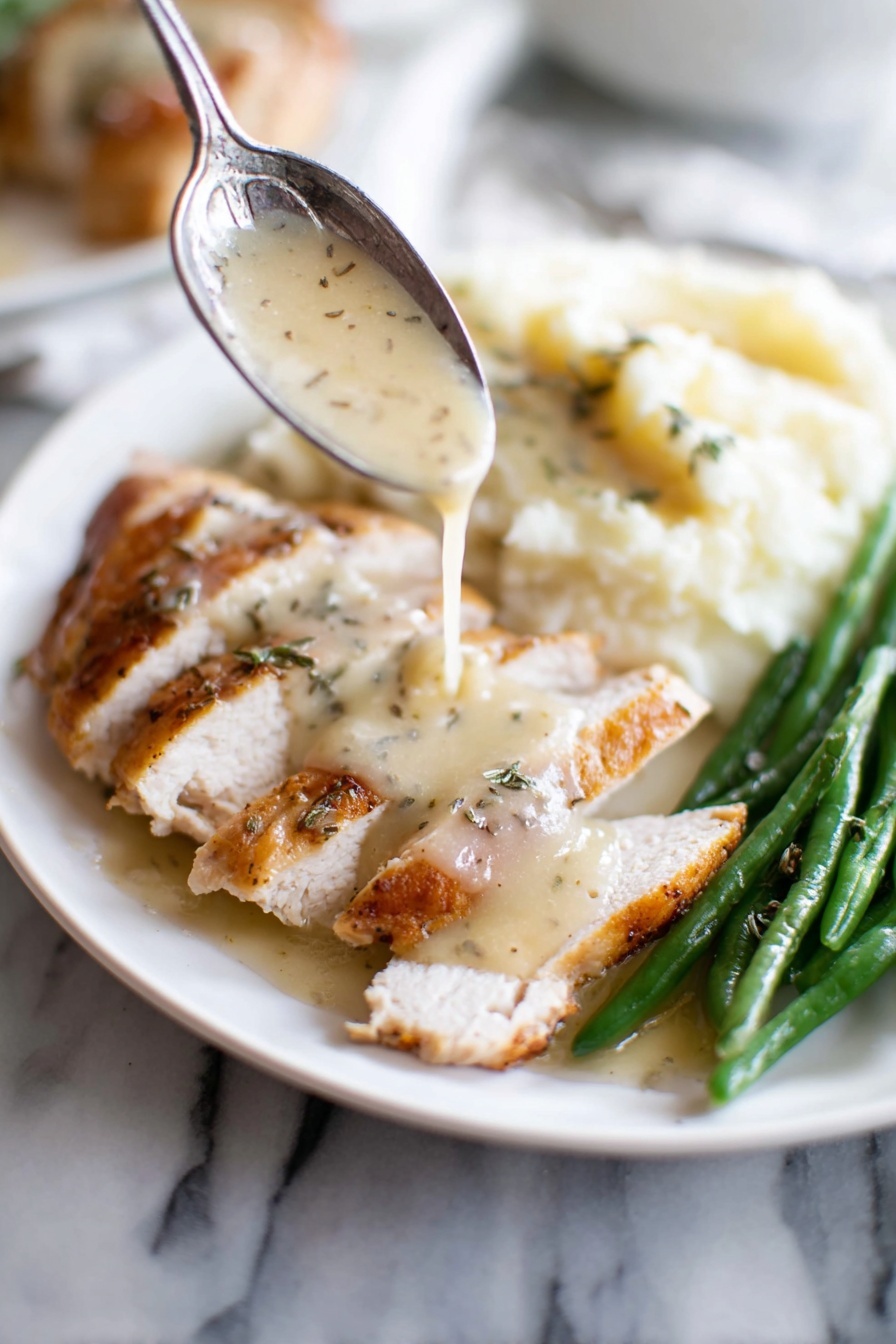
Give it a taste test and season with salt and pepper as you like. I usually start light—sometimes the pan drippings bring enough saltiness—but adjust to your preference. Then, pour over your turkey or mashed potatoes and enjoy the applause from happy eaters.
Pro Tips for Making Easy Turkey Gravy Recipe
- Strain the Drippings: Trust me, straining ensures smooth gravy with no bitter burnt bits.
- Cook the Flour Properly: Whisk often and don’t rush the roux—it prevents that raw flour taste.
- Keep Whisking: Frequent whisking while simmering helps avoid lumps and scorching on the bottom.
- Adjust Stock as Needed: Adding stock gradually helps control thickness and flavor intensity perfectly.
How to Serve Easy Turkey Gravy Recipe
Garnishes
I love a sprinkle of fresh thyme leaves or a tiny dash of cracked black pepper right before serving—it adds a lovely fresh touch and looks inviting. Sometimes I throw in a bit of finely chopped parsley for color, but keep it simple so the gravy’s flavor shines through.
Side Dishes
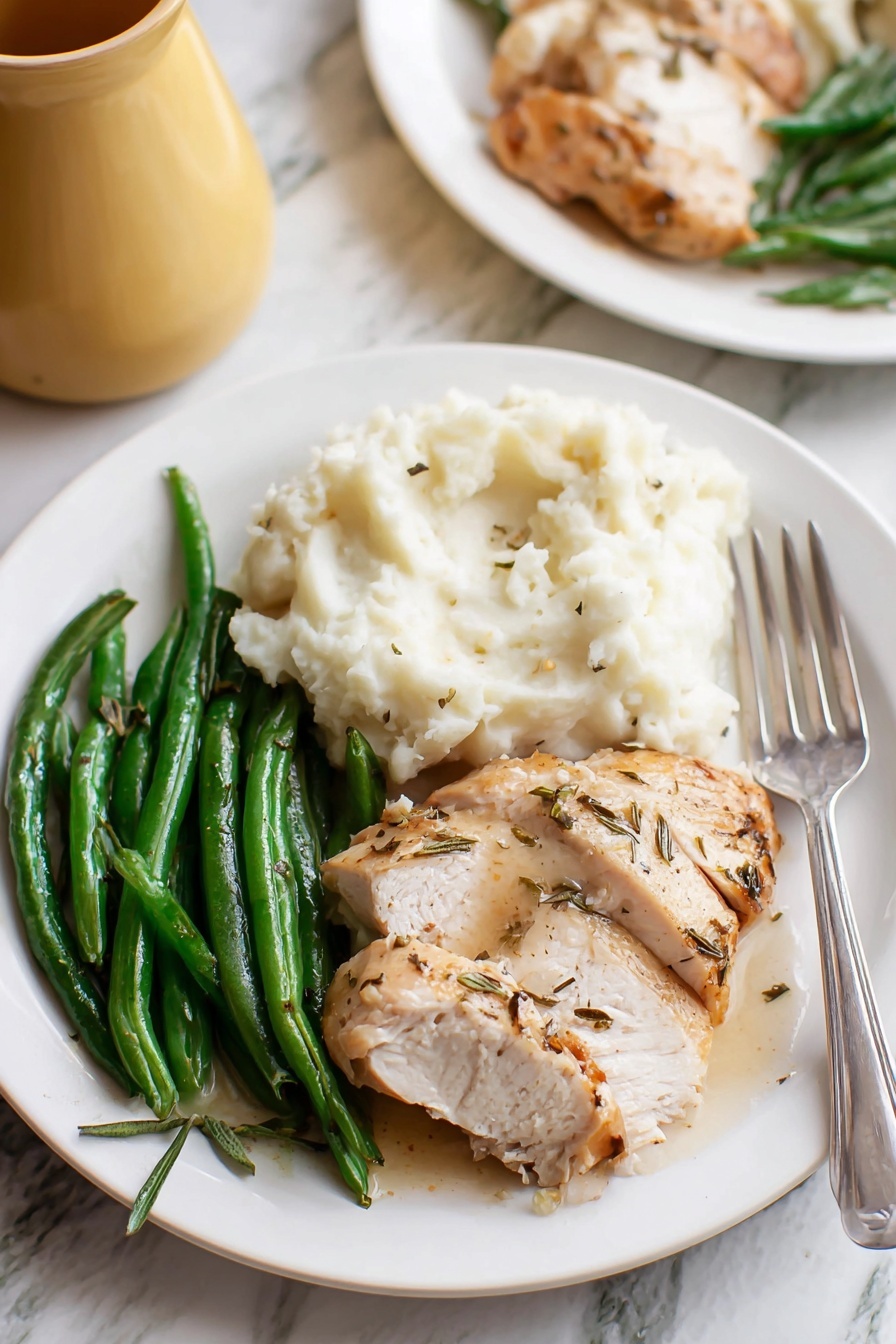
This easy turkey gravy recipe goes best with classic mashed potatoes, roasted veggies, and of course turkey breast or thighs. I’ve also poured it over stuffing and even creamy polenta with great success—its versatility never fails me.
Creative Ways to Present
For special occasions, I sometimes pour the gravy into a beautiful gravy boat or a warm ceramic dish and garnish the edges with fresh herbs. It’s simple but instantly makes the table feel more festive. Another fun trick? Pour a thin ribbon of gravy over individual plates, framing your turkey slices—always gets compliments!
Make Ahead and Storage
Storing Leftovers
I put leftover gravy in an airtight container and pop it in the fridge—it keeps nicely for up to 2 days. When I reheat, I bring it to a gentle boil to refresh the texture and taste before serving. It’s surprisingly easy to save without losing that fresh-from-the-pan flavor.
Freezing
Freezing this gravy works like a charm. I pour it into freezer-safe containers or bags, leaving a bit of headspace, and freeze for up to 4 months. When it’s time to use, I thaw it overnight in the fridge, then heat it up slowly on the stove to bring it back to life. It’s a lifesaver when you want to prep ahead!
Reheating
The key to reheating is to do it gently over medium-low heat, stirring often. If the gravy gets too thick after resting, just add a splash of broth or water while reheating to loosen it up. I like to whisk it continuously to keep it smooth—no lumps allowed!
FAQs
-
Can I make this easy turkey gravy recipe without pan drippings?
Absolutely! If you don’t have enough pan drippings, simply substitute with good-quality turkey or vegetable stock. While the flavor won’t be quite the same as drippings, the fresh herbs and proper roux will still give you a delicious, rich gravy.
-
How do I prevent lumps in my turkey gravy?
The secret is whisking constantly while adding the flour and stock gradually. Cooking the roux until golden also helps avoid that raw flour taste. Adding the liquid slowly and stirring briskly keeps lumps from forming.
-
Can I prepare this easy turkey gravy recipe ahead of time?
Yes! You can make the gravy up to two days in advance, store it in the fridge, and reheat it before serving. It also freezes beautifully for longer storage — just be sure to reheat it on the stove slowly, whisking to restore the smooth texture.
-
What if my gravy is too thick or too thin?
If it’s too thick, whisk in a little more stock or water over low heat until you reach your desired consistency. If too thin, make a slurry by mixing a teaspoon of flour with cold water and whisk it in gradually while heating, to thicken gently.
Final Thoughts
This easy turkey gravy recipe has become a go-to in my kitchen whenever I want that rich, comforting flavor without the stress. It’s straightforward enough for busy home cooks but impressive enough that guests always ask for the recipe. I’m confident you’ll love how this gravy brings your turkey and sides together into one satisfying bite after another. Give it a try—you’ll wonder how you ever did the holidays without it!
Print
Easy Turkey Gravy Recipe
- Prep Time: 5 minutes
- Cook Time: 15 minutes
- Total Time: 20 minutes
- Yield: 12 servings
- Category: Sauce
- Method: Stovetop
- Cuisine: American
- Diet: Halal
Description
This classic turkey gravy recipe is made from pan drippings, enriched with butter, aromatic herbs, and thickened with flour to create a smooth and flavorful sauce perfect for complementing your turkey or other poultry dishes.
Ingredients
Gravy Ingredients
- 1/4 cup butter
- 1/4 teaspoon dried sage
- 2 teaspoons fresh thyme, minced
- 1 garlic clove, minced
- 1/4 cup all-purpose flour
- 2 1/2 cups turkey stock, preferably from pan drippings
Instructions
- Prepare the stock: If using pan drippings, strain them through a fine mesh sieve to remove solids. Reserve about 2 1/2 cups of the liquid. If there isn’t enough pan drippings, substitute with turkey or vegetable stock.
- Melt butter and sauté aromatics: In a 3-quart saucepan over medium heat, melt the butter. Add minced garlic, dried sage, and fresh thyme, cooking for 1 minute while stirring constantly to release the herbs’ aroma.
- Add flour and cook roux: Whisk in the all-purpose flour and continue whisking frequently for about 2 minutes until the mixture turns golden brown, which helps cook out the raw flour taste.
- Incorporate stock: Gradually whisk in the reserved pan drippings or prepared turkey stock. Bring the mixture to a boil, then reduce to a simmer, whisking frequently for 5 to 7 minutes until the gravy thickens to a smooth consistency.
- Season and serve: Taste the gravy and season with salt and pepper as desired. Serve the gravy immediately over turkey or your favorite side dishes.
Notes
- Refrigerate leftover gravy in an airtight container for up to 2 days. To extend its life, reheat and bring to a boil before serving, lasting up to 5 days.
- Freeze gravy in a freezer-safe container or bag for up to 4 months. Thaw overnight in the refrigerator and reheat to boiling before serving.
- If you don’t have fresh herbs, you may increase the dried sage slightly but use sparingly to avoid overpowering the flavor.
- For gluten-free option, substitute all-purpose flour with a gluten-free flour blend.
Nutrition
- Serving Size: 1/4 cup
- Calories: 70 kcal
- Sugar: 0.2 g
- Sodium: 120 mg
- Fat: 5 g
- Saturated Fat: 3 g
- Unsaturated Fat: 2 g
- Trans Fat: 0 g
- Carbohydrates: 5 g
- Fiber: 0.3 g
- Protein: 0.5 g
- Cholesterol: 15 mg