
Basque Cheesecake Recipe
If you’re on the hunt for a dessert that’s impressively delicious yet wonderfully simple, you’ve got to try this Basque Cheesecake Recipe. It’s the kind of cheesecake that wowed me the first time I made it—crispy burnt top, creamy center, and no crust to fuss over. If you love cheesecake but want something a little different, this Basque style will be your new favorite in no time. Trust me, the more you make it, the more you’ll understand why it’s a crowd-pleaser!
Why This Recipe Works
- Simplicity Meets Elegance: Just a handful of ingredients come together to create a luxurious, rich cheesecake with minimal fuss.
- Perfectly Rustic Crusting: The high baking temperature caramelizes the top, giving it that signature ‘burnt’ look and smoky flavor without bitterness.
- Creamy and Silky Center: Gentle mixing techniques ensure a smooth texture that melts in your mouth, without any graininess or cracks.
- Versatile and Forgiving: Whether it’s your first cheesecake or your tenth, this recipe adjusts easily and looks beautiful even if it’s a little rough around the edges.

Ingredients & Why They Work
Every ingredient in this Basque Cheesecake Recipe serves a clear purpose, working together to build that signature creamy base and deeply caramelized top. High-quality cream cheese and full-fat dairy are non-negotiable if you want the right texture and flavor, and making sure everything is at room temperature helps avoid lumps and overmixing.

- Cream Cheese: Use full-fat and room temperature cream cheese to achieve the smoothest texture and avoid lumps.
- Granulated Sugar: Sweetens and helps create that caramelized top. Adjust to taste if you prefer sweeter or less sweet.
- Eggs: Room temperature eggs help bind the cheesecake gently, making it silky without adding air bubbles.
- Heavy Cream: Adds richness and moisture; using room temperature cream prevents the batter from curdling.
- Vanilla Extract: Adds warmth and depth, rounding out the flavor.
- Salt: Balances sweetness and enhances the overall flavor.
- All-Purpose Flour: Just a touch to provide structure without making it dense.
Tweak to Your Taste
One of the best things about this Basque Cheesecake Recipe is how easy it is to make your own tweaks without losing its magic. I often play around with the sweetness and toppings, but the core remains classic and reliable every time.
- Adjusting Sweetness: I’ve tried reducing the sugar slightly to 1¼ cups for a less sweet cheesecake that pairs beautifully with tart berries.
- Flavored Variations: Adding a teaspoon of almond extract or lemon zest can give it a new twist when you’re craving something different.
- Dairy Swaps: If you find farm-fresh double cream locally, swapping it for heavy cream transforms the richness tenfold — give it a go if you can!
Step-by-Step: How I Make Basque Cheesecake Recipe
Step 1: Prep Like a Pro — The Parchment Setup
The first thing I do is preheat the oven to 425°F and cover my 9 or 10-inch springform pan with a double layer of parchment paper criss-crossed. Here’s a trick I learned: wet the parchment sheets, scrunch them up, and then dry them before lining the pan. This makes the parchment super flexible and easier to shape, plus it helps the paper stand tall about 2 inches above the pan’s edge — you’ll need this because the batter rises like crazy!
Step 2: Beat the Cream Cheese Until Smooth
I use a stand mixer with a whisk attachment for this part, whipping the room temperature cream cheese for about 2 minutes until it’s silky and lump-free. Don’t rush this step — smooth cream cheese is the secret weapon for that flawless cheesecake texture.
Step 3: Sweeten and Incorporate Eggs Carefully
Next, add the sugar gradually, beating on medium speed until it’s fully integrated and smooth — about 2 minutes. Be sure to scrape down the bowl edges to keep it even. Then, add eggs one at a time on low speed. This part requires patience — only add the next egg once the previous one is mostly mixed in. Moving slowly here keeps the batter silky and prevents unwanted air bubbles.
Step 4: Add Cream, Vanilla, Salt, and Flour
With the mixer on low again, pour in the room temperature heavy cream, vanilla extract, and salt. Mix until everything’s smoothly blended. Finally, sift in the flour to avoid lumps, and mix gently for about 20 seconds. Remember, minimal stirring is crucial to preserving that dense yet creamy consistency.
Step 5: Bake It to Perfection
Pour your luscious batter into the parchment-lined pan, then set it on a rimmed baking sheet on the center rack of your oven. Bake for 50 to 65 minutes. You’ll notice it puffing up, then sinking as it cools — all totally normal. Look for a deep golden brown top and a still-jiggly center; that jiggle means it’s creamy inside, which will firm up after chilling.
Step 6: Chill and Slice for Best Results
Once it’s out of the oven, let the cheesecake cool to room temperature while still in the pan. Then refrigerate for at least 8 hours, ideally overnight. This chilling step is key for that perfect texture. When you’re ready to serve, remove the cheesecake by gently lifting it out with the parchment paper edges. For clean slices, heat a large chef’s knife under hot water and wipe it dry between each cut.
Pro Tips for Making Basque Cheesecake Recipe
- Room Temperature Is Your Friend: Always bring the cream cheese, eggs, and heavy cream to room temp to ensure a smooth batter without lumps.
- Mix Slowly and Gently: Avoid overmixing to prevent air bubbles or a souffle-like texture. Slow speed keeps it creamy and dense.
- Watch That Oven: Each oven is different, so start checking at 50 minutes and look for a golden top that’s slightly jiggly at the center.
- Don’t Skip the Chill: The overnight chill firms up the cheesecake and develops the flavors beautifully.
How to Serve Basque Cheesecake Recipe

Garnishes
I usually keep it simple and let the cheesecake shine on its own, but a fresh berry compote or a drizzle of honey adds a lovely fresh contrast. If I’m feeling fancy, a sprinkle of toasted nuts or a few edible flowers make it stunning for guests.
Side Dishes
This cheesecake pairs wonderfully with a crisp cup of coffee or a bold herbal tea. If serving at a dinner party, a light fruit salad or citrus sorbet alongside balances the richness perfectly.
Creative Ways to Present
For special occasions, I’ve presented individual Basque cheesecakes in mini springform pans – they look gorgeous and feel extra special. Another fun idea is layering thin slices between delicate almond tuile cookies for a unique texture play.
Make Ahead and Storage
Storing Leftovers
I store leftover Basque cheesecake in its original pan, tightly wrapped with plastic wrap, and keep it refrigerated. It lasts beautifully for up to a week, and I love how the flavors mellow with time.
Freezing
Freezing works surprisingly well! After chilling fully, I wrap the whole cheesecake tightly in plastic wrap and then aluminum foil, which protects the delicate texture. When thawed in the fridge overnight, it tastes nearly as good as fresh.
Reheating
Reheat slices at room temperature before serving for the best texture. Avoid microwaving; instead, leave out 1-2 hours before slicing—this keeps the cheesecake creamy and not rubbery.
FAQs
-
Can I use low-fat cream cheese for Basque Cheesecake Recipe?
For the best texture and flavor, I strongly recommend full-fat cream cheese. Low-fat versions tend to make the cheesecake too dense or watery, compromising the signature creamy texture.
-
Why does the top of Basque cheesecake need to be burnt?
The burnt top is actually caramelized sugar and proteins, which adds a smoky, slightly bitter contrast that balances the rich, creamy filling—it’s the hallmark of the Basque cheesecake!
-
Can I make this cheesecake without a springform pan?
A springform pan is preferred because it allows you to easily remove the cheesecake without damaging it. If you don’t have one, a cake pan lined heavily with parchment paper standing above the edges can work, but be extra gentle when unmolding.
-
What if my Basque cheesecake cracks?
This cheesecake is naturally rustic and imperfect—some cracks are normal! It’s meant to be somewhat rustic in appearance, so don’t stress if it’s not perfectly smooth.
-
How long can I keep Basque cheesecake in the fridge?
You can store the cheesecake in the fridge for up to 1 week, tightly wrapped or in an airtight container to preserve freshness.
Final Thoughts
Honestly, this Basque Cheesecake Recipe has become a staple in my kitchen whenever I want something that feels special but isn’t complicated. It’s rustic, elegant, and incredibly forgiving, which means whether you’re a first-timer or an experienced baker, you’ll walk away with something delicious. Give it a try—you might find yourself making it over and over like I do, everyone asking for that secret burnt top and creamy center. Happy baking!
Print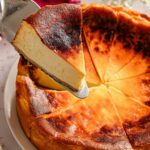
Basque Cheesecake Recipe
- Prep Time: 15 minutes
- Cook Time: 1 hour
- Total Time: 11 hours 15 minutes
- Yield: 12 servings
- Category: Dessert
- Method: Baking
- Cuisine: Spanish
Description
This Basque Cheesecake features a creamy, silky texture with a characteristic burnt golden-brown top and rustic appearance. It’s an impressive dessert that’s simple to make, perfect for parties or special occasions, and best served at room temperature with optional fruit compote or toppings.
Ingredients
Cheesecake Batter
- 32 ounces cream cheese, room temperature and full-fat only
- 1½ cups granulated sugar
- 5 large eggs, room temperature
- 1½ cups heavy cream, room temperature
- 1 tablespoon vanilla extract
- 1 teaspoon salt
- ⅓ cup all-purpose flour, sifted
Instructions
- Prepare the Pan: Preheat the oven to 425°F. Line a 9 or 10-inch springform pan with a criss-crossed double layer of parchment paper. To make the parchment easier to work with, wet, scrunch, and dry it. The parchment should extend about 2 inches above the top of the pan. Set aside.
- Mix Cream Cheese: In a large bowl or a stand mixer fitted with a whisk attachment, whip the cream cheese for 2 minutes until smooth.
- Add Sugar: Add the granulated sugar and mix on medium speed until smooth, about 2 minutes. Scrape down the sides as needed to avoid lumps.
- Incorporate Eggs: Add the eggs one at a time on low speed, making sure only a little yellow remains from the previous egg before adding the next to avoid overmixing.
- Add Cream and Flavorings: With the mixer on low, pour in the heavy cream, vanilla extract, and salt. Mix until fully incorporated.
- Add Flour: Sift the flour into the batter and mix for about 20 seconds on low speed until combined.
- Pour and Bake: Pour the batter into the prepared springform pan. Place the pan on a rimmed baking sheet and bake on the middle oven rack for 65 minutes until the top is golden brown and the center is still slightly jiggly.
- Cool: Remove the cheesecake from the oven and transfer it with the pan to a wire rack to cool to room temperature.
- Chill: Refrigerate the cheesecake in the pan for at least 8 hours, preferably overnight.
- Serve: Remove the cheesecake from the refrigerator 1 to 2 hours before serving. Use the parchment edges to lift it from the pan base. For clean slices, heat a large chef’s knife under hot water and slice the cheesecake.
- Optional Toppings: Serve plain or with fruit compote or your favorite cheesecake topping.
Notes
- Use full-fat cream cheese and heavy cream for the best creamy texture.
- Do not overwhip the eggs or cream to prevent air bubbles and a souffle-like texture.
- Do not remove the cheesecake from the pan until it has completely cooled to avoid breaking.
- Serve at room temperature for optimal flavor and texture but store in the refrigerator.
- You can store the cheesecake refrigerated for up to 1 week.
- The cheesecake is freezer-friendly for up to 3 months; wrap well with plastic wrap and foil.
- If available, use farm fresh double cream instead of regular heavy cream for richer flavor.
- The sugar amount can be adjusted from 1¼ to 2 cups depending on preferred sweetness.
- The rustic appearance is intentional and part of the charm of this cheesecake.
Nutrition
- Serving Size: 1 slice
- Calories: 450 kcal
- Sugar: 30 g
- Sodium: 290 mg
- Fat: 35 g
- Saturated Fat: 22 g
- Unsaturated Fat: 10 g
- Trans Fat: 0 g
- Carbohydrates: 28 g
- Fiber: 0 g
- Protein: 7 g
- Cholesterol: 160 mg